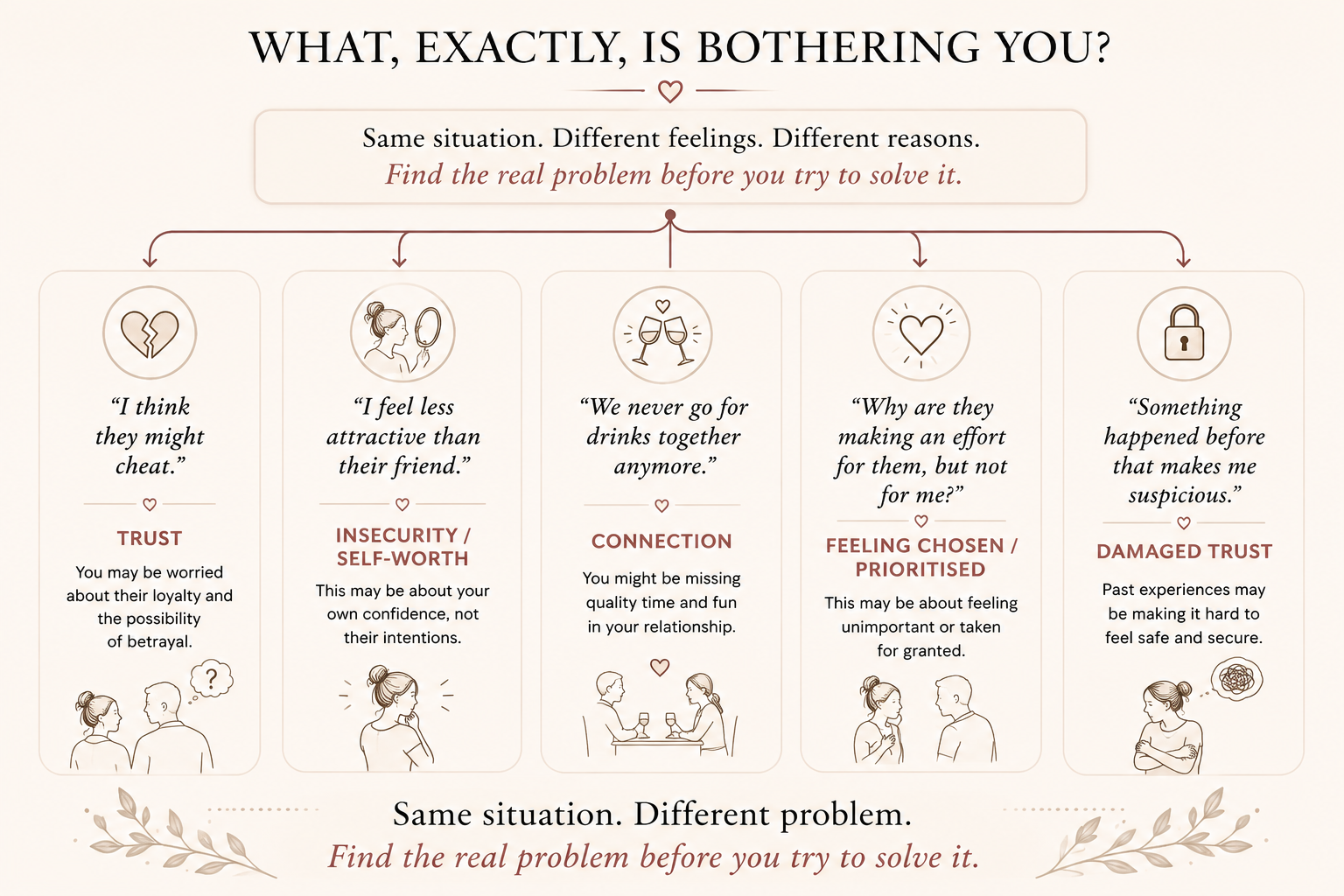
HOW TO READ YOUR CHECK-IN
WHAT YOUR ANSWERS ARE TELLING YOU
This isn’t a relationship score. It’s a snapshot of where you are right now. Look at each pillar separately — especially the places where you and your partner answered differently.
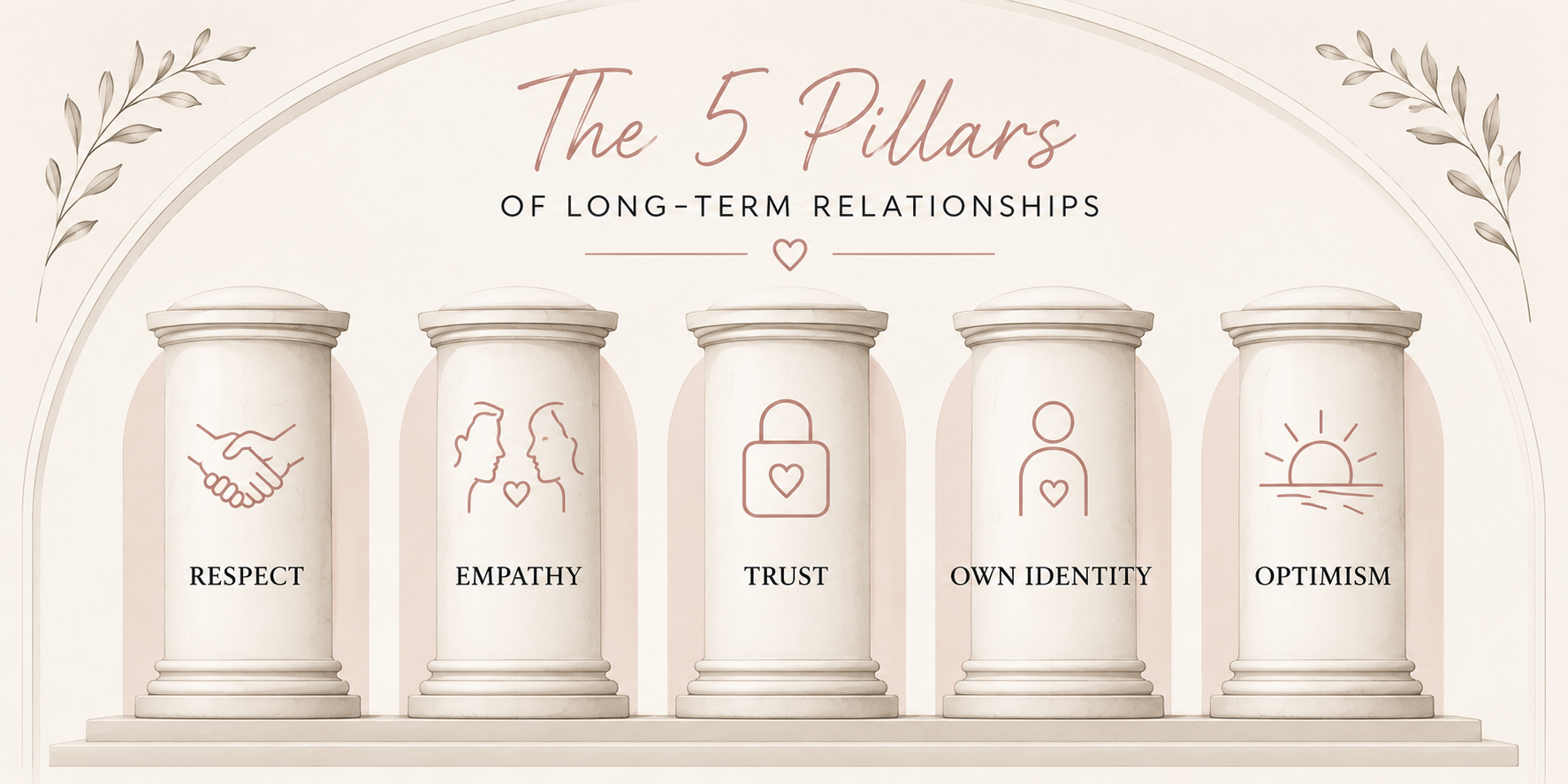
LOOK AT THE PATTERN, NOT THE SCORE
Don’t add up your answers and decide whether your relationship “passes.” Instead, look for patterns. Which pillar feels strongest? Which one keeps producing “Not really” or “No”? And where did you and your partner see the same relationship differently?
WHAT EACH ANSWER MEANS
YES — THIS PILLAR FEELS SOLID
You’re not saying the relationship is perfect. You’re saying this particular foundation is consistently there.
NOT REALLY — THIS NEEDS ATTENTION
A pattern is forming here. Don’t average it out because other parts of the relationship feel good. Look at what keeps happening, and what would need to change.
USUALLY — MOSTLY SOLID, BUT NOTICE THE EXCEPTIONS
Things are generally working here. The important question is whether those exceptions are genuinely occasional — or becoming more frequent.
NO — DON’T IGNORE THIS
Something important isn’t working in this pillar. Treat that seriously, especially if the issue involves fear, contempt, control or feeling unable to be yourself.
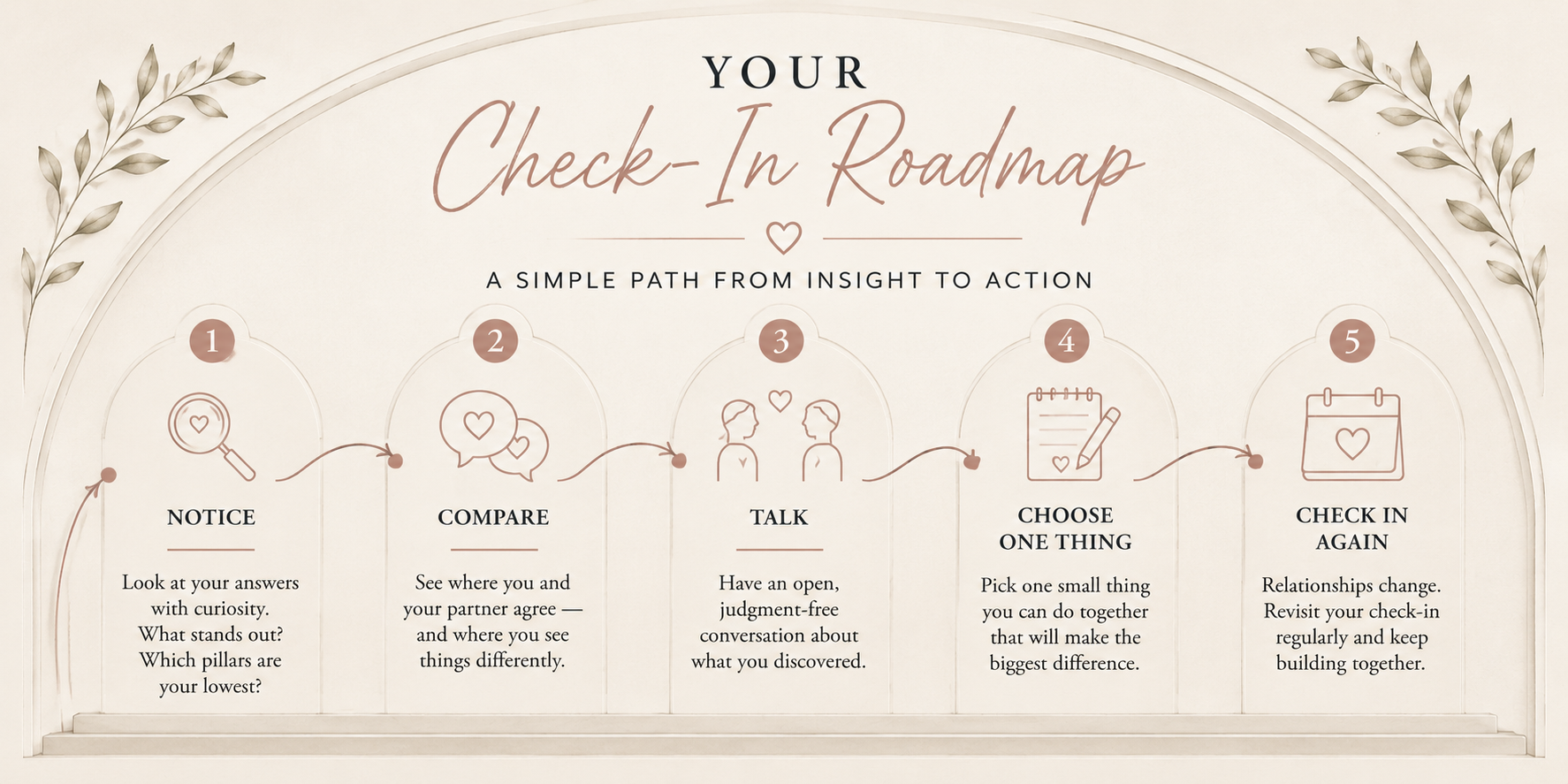
SEE IT IN PRACTICE
TRUST: IS THE FRIEND REALLY THE PROBLEM?
THE SITUATION
Your partner tells you they’re going for a drink with an attractive friend. They’ve given you no particular reason to think anything is going on. They say they’re just friends.
But you’re uncomfortable.
It would be easy to stop there and call this a trust problem. But before you do, ask a more useful question: